

Showing posts with label type: red. Show all posts
Showing posts with label type: red. Show all posts
Trus 2005 DO Ribera del Duero
Krel 2009 DO Ribera del Duero
 When I'm tasting wines, I usually spit them out, unless the wine is too good to be true, then I will swallow. Gladly that's the case with this wine. This sample I received from the export manager of Bodegas Trus. We met at a tasting event of Spanish wines from Castilla and León. The grape variety tempranillo is called tinto fino locally. Level of alcohol is set at 14%. Dark purple colour. Before rolling the glass I smell the scent of the barriques, this wine riped as long as twelve months in oak. After rolling I smell the freshness of anise together with lots of fruitiness. Tannins are hardly noticeable. Maturing on oak has an added value in this case. Subtle flavors of vanilla and caramel. It is well integrated into the wine, noticeable, but never dominant. There is a fine balance between sweetness and acidity. Flavors of raspberry, strawberry and sweet cherry. This wine is very fresh, hints of liquorice, full of concentrated red fruits and full-bodied without being graceless.
The Dot Austrian Cherry Zweigelt 2009
 Bought at a supermarket called C1000 for €6,99 alcoholpercentage is 13%. It strikes me that Austrian wines often have screwcaps, even class wines. A screwcap is a perfect means of closure, but that is exactly what it does: it seals the wine. Perfectly alright for young wines or wines which are at their best when put on the market. Class wines however should be allowed to breathe, a screwcap prohibits this. I'm not saying I tasted a class wine today, far from it. This Austrian wine appears young and should be drunk young. Magenta colour, primary aromas, a bit of a stink: I say forest soil. The flavour of black fruits, blackberries. The cherry they promised me isn't there. Slightly burning peppery sensation in the throat, moderate acidity and a mediocre final. A young and easy wine is enough said. Very well drinkable, but nothing special.
Corte Fiorita Valpolicella DOC Ripasso 2006
 This wine I bought from an internetshop called Wijnwagentje for €9,50 alcoholpercentage is 13,5%. Grape varieties corvina, rondinella and molinara, exact ratios not mentioned anywhere. After fermentation, the juice of this blend was put together with the waste, grape skins and seeds, of already fermented Amarone wine. A second fermentation for this Ripasso is the result, hence the name Ripasso, which literally means "pass again". It results in a richer aroma and flavour. The aroma of the oak maturation is the first what comes right at ya, so let it breath for a while. After having done this, a sweet aroma is apparent. It's low on tannines. The taste then: red fruit, berries but especially cherries. Next in line, from the second glass however, are chocolate, leather and tobacco flavours. Which means this is a multi layered wine, usually referred to as being "complex". When someone uses that word, he means that the wine is very good. All good wines tend to be complex. With each glass, with each sip even, you will discover new impressions. Acids are there of course, but a perfect balance is what characterizes this wine. This bottle I shared with my brother-in-law who also enjoyed it very much. Unfortunately this wine is all sold out.
Ruffino Riserva Ducale 2006 Chianti Classico DOCG
 #Twittertasting. Tuesday September 13th 20:30 hrs Amsterdam Time. Live twitter report on the theme Chianti Classico. I did not have one stored in my cellar so I especially bought one at the MAKRO for €16,41 alcoholpercentage is 13%. The main grape variety is the sangiovese, with a minimum of 80%, supplemented with cabernet sauvignon and merlot, exact ratios not mentioned on the label nor on their website.
#In the glass and already for two hours in the carafe: Ruffino Riserva Ducale 2006 Chianti Classico DOCG. #Walking towards the fluorescent light. Colour: dark ruby-red with an edge leaning towards brown. #Good, transferring it to the carafe did the trick. Hardly any oak noticeable, just a hint of vanilla. #Very fresh in the nose: minty, Fishermans Friend even! Also some liquorice. Looks like I walked into a candy store! #Wow, the freshness enters my mouth. Good, cool temperature. Red fruit, especially cherry. Low on tannines. #Surely no taste buds bomb. It lingers on the lower part of the mouth. Short final. The acidity could have been higher. #That first fresh impression I had, seems to be nothing more than a thin, watery taste. It doesn't heat me up! #After spitting it out the whole time, I will now swallow it; perhaps that will make a difference. #This certainly is no complex wine, which I had expected for that price. It goes to show you: prices don't mean shit! #Nope, even swallowing doesn't add anything. At most maybe a headache, but I won't know that until tomorrow morning. #I can't make anymore of this Chianti Classico. I will go on drinking this bottle, but the tweets will stop here. #Twexit.
Ponsart Editie Nr.18 Ahr Spätburgunder 2007
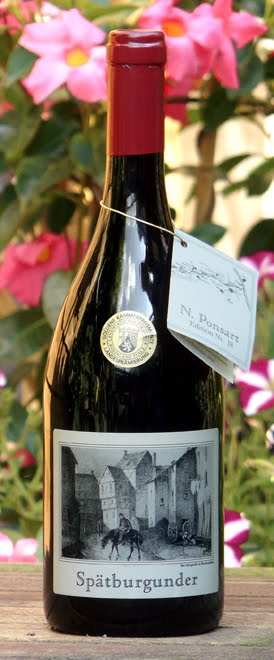 Sadly this is the last bottle already of the collection spätburgunders I took home with me from my roadtrip through "das Ahrtal" in Germany. It came from a local supermarket called "HIT" for €14,99 alcoholpercentage is a whopping 14,5%. My head is spinning noticeably after just two glasses. But it's worth it. German pinot noir, or spätburgunder as it is called here, is in a completely different league from Burgundy pinot noirs. Comparing them is like comparing apples and oranges, but on their own they are both very tasty and some of them are real gems. Gladly this is one of those. Nevertheless it comes second after the Jean Stodden pinot noir I already have tasted. Clear, pale red colour. The typical aroma of pinot noir is apparent, also the scent of forest soil. The first sip immediately reveals what is so characteristic of German spätburgunders: its bitterness. Orange zest, grapefruit, strawberry, liquorice but I can also taste something green still. Some immaturity perhaps. Despite it being a warm wine and the high level of alcohol it is still a very fresh wine. Beautifully balanced and perfectly ready to drink.
Arauco Carmenère DO Central Valley 2009
 Bought at the MITRA for €4,99 alcoholpercentage is 13,5%. The grape variety carmenère originated from the Médoc area in Bordeaux, France. Just before the all devastating phylloxera roamed around Europe and also annihilated this kind, it got imported in Chile. For a hundred years no one thought there to be any left in the world. The wines which then came from Chile thought to be all merlot, including by the Chileans themselves, tasted sour. A French oenologist went to Chile and discovered that carmenère and merlot grapes were planted together in the vineyards, harvested together and made into wine together, believing it was all merlot. The Chileans were shocked at first, then seperated the grapes, and ever since Chile is the only country where this grape variety grows in large numbers. Now they are really proud that it is considered Chile's national grape. The wine I'm drinking has a beautiful rubyred colour and smells at first like laurel. It also remotely smells like a pinotage wine. I sense some spiciness and some black pepper. This all comes back in the taste along with some red berries. Its bitterness is quite high, but it's low on tannins. It's fresh, it's fruity, it's juicy, it's rich. Almost like a meal wine, but then literally. Drink this wine and you will get the feeling of tasting a complete meal. Well, potatoes and meat excluded, but the vegetables, herbs and fruit are all in there. Very tasty!
Santa Julia Mendoza Bonarda 2009
 Bought at the JUMBO for €4,29 alcoholpercentage is 13%. My quest is to drink as many single grape variety wines as possible and now the grape variety bonarda can be chalked off that list. Sustainably grown grapes, it says on the label. Whether this is the same as organic, is not really clear; at least there is no residu, which has been the case every time I tasted organic wines, so I'm guessing it's not. Nice, young magenta colour in the glass. Primary aroma, flavours of red, ripe fruit: cherry, strawberry, blackberry. Even a little hint of rhubarb and the association with an apple orchard comes to mind. Good acidity, the aftertaste reasonably short however. It's fresh, it's fruity, but nothing special. Then why did I empty almost the entire bottle on one evening, without even the slightest nasty side effect the next morning? Because there is enough tension and a good balance in this wine.
O1 Ouno DO Toro 2006
 With all the attention CabernetDay received through the Social Media yesterday, one could almost forget it was also Tempranillo day. I don't know where this came from or who organised it, but I saw a reasonable amount of tweets flying by. So today I'm catching up on this. This bottle I bought for €5,82 at the Makro in Holland, alcoholpercentage is 13,5% and it's supposed to be an organic wine. I knowingly say "supposed" because as long as there are no regulating laws for this, I tend to have my reservations about it. What I have noticed though with organic wines, is that they all have some residue. That's also the case with this one. So leave a little bit behind in the bottle while decanting it. This wine hasn't matured in oak barrels. Rather unique among the tempranillo-based wines I already have tasted. Could this mean I will actually get to the typical characteristics of this grape today? The label says "tinta de toro", which is a synonym for tempranillo. The wine also originates from the region "Toro" in Spain. Deep, darkred colour in the glass. A bit of stinky smell in the nose, like potting soil. Also ripe red fruit, raisins and plum. Nicely fruity fragrances! That's what I like. The first sip reveals the taste of raisins and dried plum, as I expected. It even seems a bit like port. Slightly sweet at first, but then the acids take over, moderately though. Quite a nice balance between the two. Red berries. Tannins are quite high. The final is a bit short, the taste doesn't linger for too long, but that makes you wanna pour another glass as soon as possible. Because of the amount of tannins it doesn't quite suit a wine-novice, but when you're a fan of honest, fruity wines; this is a good choice.
#CabernetDay: Domaine Gayda Figure Libre 2008
 #CabernetDay. That's today. The second annual Cabernet Day, celebrated all over the world, 24 hrs long. It's also a Social Media event, so you can join through whichever type of Social Media you use, like Facebook or Twitter, by opening up a bottle of wine consisting of the grape variety cabernet and share your thoughts about that wine. This can be cabernet sauvignon, cabernet franc or a blend of the two. Because I cannot wait until tonight, I will join the rest of Australia at this moment; it's 10 AM in the Netherlands. On my table there is a wine which I bought in France at Domaine Gayda. It set me back €14. It's the Figure Libre 2008, a blend of 89% cabernet franc and 11% cabernet sauvignon. Alcoholpercentage is 14,5%. Here's what I had to tweet about it.
 #Lots of smoky oak in the nose. #The oakyness is deminishing by the minute, gladly! #Mmmm, this is very good! The first sip slithers into my mouth with a beautiful silkyness. #Hard to distinguish any fruit yet. Mostly smell and taste of pencil shavings. #Cherry, blackberry and some plum is now noticable. Some spicyness too. #The oak is converting slightly into vanilla flavour at this moment. #I'm now leaving it to rest for an hour. See how it will develop. #Back again. Let's find out if and/or how the wine has developed in the last hour. #Well, it hasn't. Still dominant pencil shavings, both in smell and taste. Cabernet franc characteristic. #Tannins are low, it's a bit burning, a bitterness towards the end. #It's nice and fresh, could be a bit more fruity, but good acidity and balance. #Twexit.
Subscribe to:
Posts (Atom)